
CASE STUDY: SEEN.
Supporting a founder at the beginning of building something new…
Victoria was at the early stages of building Seen, with a clear vision but a lot competing for attention.
Like many founders at this stage, she was navigating:
big ideas
uncertainty about where to focus first
the pressure to “get it right”
the noise that comes with starting something new
What she needed wasn’t answers — it was space, clarity and confidence in her own thinking.
The focus
Our work together centred on creating breathing room and direction.
Through the Start approach, we focused on:
clarifying what mattered most right now
shaping ideas into a clear, achievable direction
identifying early priorities without overwhelm
building confidence in decision-making
There was no pressure to have everything figured out — just a place to begin.
The approach
This wasn’t about rigid plans or chasing quick wins.
Instead, we:
slowed the thinking down
separated signal from noise
explored options honestly
focused on practical next steps that felt realistic and aligned
Clarity first. Momentum second.
Early trading reality
Seen’s early months were about building momentum, not unrealistic targets.
Early-stage work isn’t about guarantees, it’s about creating the conditions for progress.
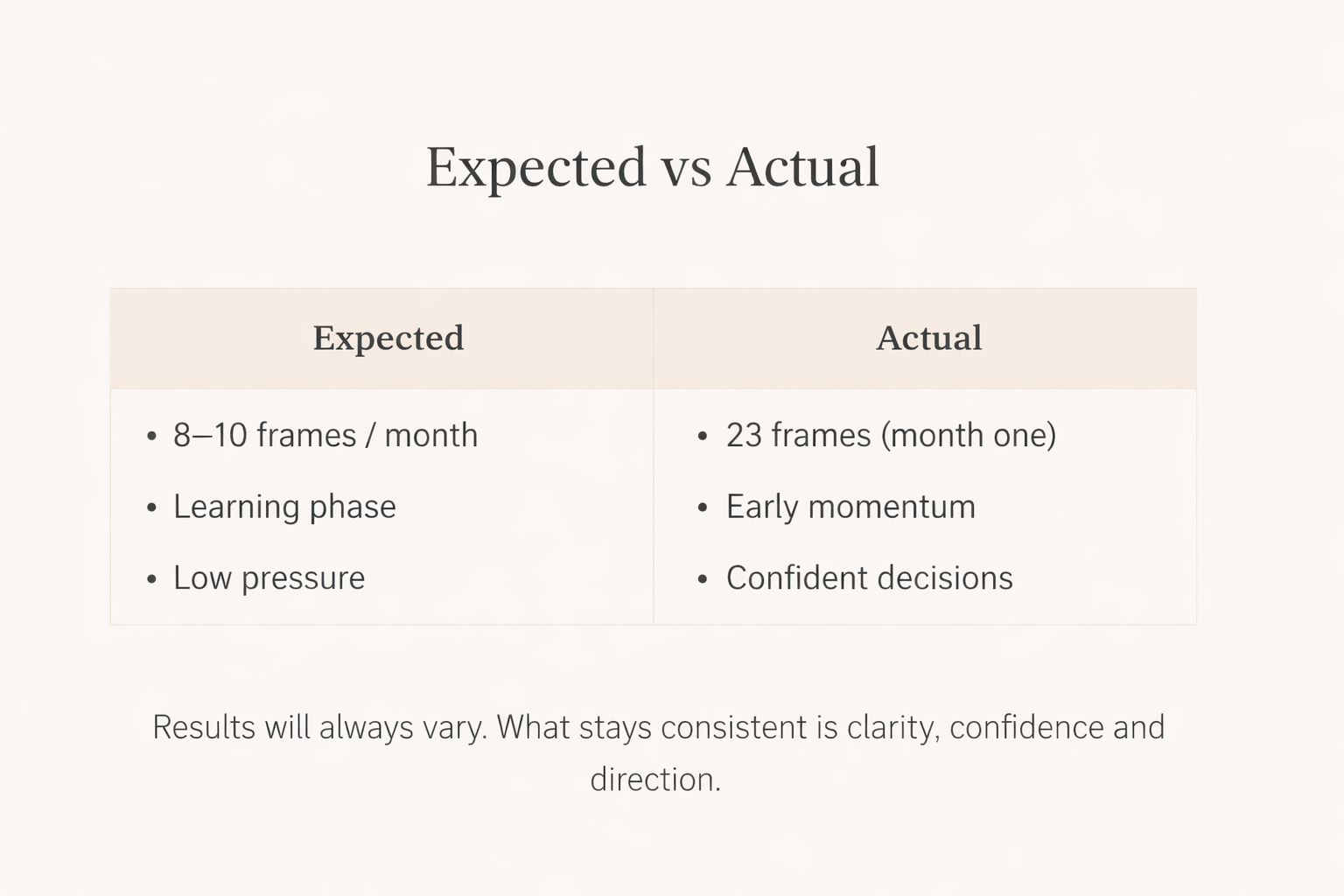
At the start, the focus was on realistic expectations, learning and building momentum at a sustainable pace. What followed exceeded those early assumptions, not because of pressure or shortcuts, but because clarity led to confident decision making.
Results will always vary but what stays consistent is clarity, confidence and direction.
Setting realistic expectations
Rather than guessing, we created a grounded runway:
Early phase: around 2 pairs per week (8–10 per month)
Medium term (around 6 months): 5 pairs per week (20+ per month)
This gave Victoria confidence to make decisions based on progress, not panic.
The outcome
Victoria left the work with:
a clearer sense of direction
confidence in her next steps
sales exceeding her initial expectations
a grounded way of moving forward with Seen
Start work often looks like this — not dramatic transformation, but quiet confidence and forward movement.
Why this matters
Early-stage support doesn’t need to be loud or prescriptive.
Sometimes, the most valuable thing is:
being seen
being heard
and being supported to trust your own judgement
That’s what Start is designed to offer.
If you’re at the beginning of an idea, a business or a shift in direction, Start offers space to think clearly and move forward with confidence.